BLOG

From SEO Penalties to Lost Sales: Why Website Security Is Now a Marketing Priority

Introduction

Site security was an "issue for the tech team" for most business owners and marketers for years. But today, in 2025, web threats are hitting SEO rankings, campaign performance, and revenue streams head-on. Site security is no longer the foundation of online trust, it is now a make-or-break matter for your marketing performance, customer loyalty, and bottom line.

1. How Website Security Directly Impacts SEO

Google Now Requires a Secure Web

Search engines, especially Google, now favor secure sites. In 2025, HTTPS is not an option, it is the bare minimum. Google has declared HTTPS as a well-established ranking signal, and any site lacking it will be dropped from the search results.

  • Not using HTTPS means having plain “Not Secure” messages in Chrome, Firefox, and Edge that scare off your visitors and destroy your rankings.
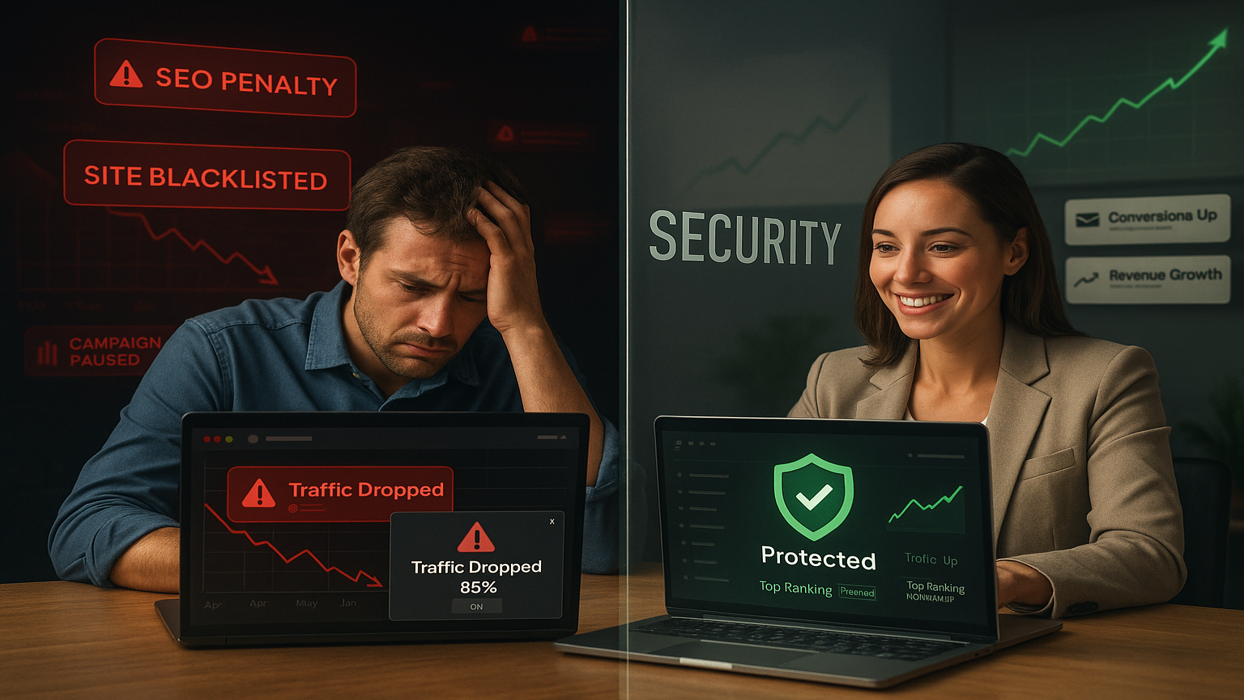
  • Google Algorithm Penalties: Sites that are hacked or infected, phishing sites, intrusive spam sites, or malware sites are penalized from keyword demotion to full de-indexing, a death sentence to search-reliant business models.

Real-World Facts

  • Close to 2 out of 3 WordPress websites pass simple security tests in 2025 because of outdated plugins or the absence of HTTPS, rendering them easy targets for both Google’s penalty filters and hackers.
  • Pages that are labeled as spam or malicious overnight can lose 70 to 100% of their organic traffic once Google delists them from search results until they are rectified.

Security Indicators Outside HTTPS

  • Secure Site Headers: Incorrectly configured security headers such as Content-Security-Policy may lead to Google site notifications and lowered trust ratings.
  • Quick, Clean Sites Do Better: Malware infections or bot traffic slows your website down, boosting bounce rates and hurting SEO rankings.

2. The Hidden Costs: Lost Sales, Downtime, and Reputation

How Vulnerabilities Kill Revenue

  • Downtime = Lost Sales: When your site is hacked or taken offline, even for one hour, potential customers, bookings, and sales are lost. For most small businesses, even a few minutes of downtime will cost $137 to $427 per minute. Not good news either for big businesses, which lose thousands per minute site downtime.
  • Lost Trust = Lost Lifetime Value: 88% of visitors report that they abandon a site after a bad security experience, rarely to return.

Your Marketing Team Noticing the Difference

  • Blacklisting Halts Campaigns in Their Tracks: Paid search, email, and SEO campaigns are a flop if your site is labeled as unsafe, resulting in wasted spend, missed leads, and sharp declines in ROI.
  • Cleanup Expenses Vary Quickly: Following the hack, you’ll pay for crisis recovery, repairs, and potentially regulatory fines, let alone the opportunity cost of lost business and sullied brand credibility.
Hidden Cost Impact On Your Business
Downtime Abrupt loss of sales, lead generation halted
Traffic loss/SEO penalties Underlying the rivalry, greater CPC
Data breach/regulatory violation Legal fees, breach of trust
Reputational damage Less customer retention + follow-up sales
Campaign disruption Ad/promo budget wasted, results lost

3. Why Website Security Is Now a Marketing Priority

Security Has Joined the Marketing Suite

  • Security Warnings Are Branding: Chrome’s “Not Secure” message appears before your homepage loads. Shoppers make safety and credibility judgments in seconds.
  • SEO & Ad Performance Rely on Security: Sites that are labeled as malware, phishing, or data exposure lose their natural and paid listing position, even if your campaigns are perfectly configured.
  • User Trust and Conversion Rate Crash: Users will not enter forms, make purchases, or share information if they do not see the padlock or receive a warning.

Compliance and Legal Exposure

  • Regulations on Privacy Now Demand Security: GDPR, CCPA, PCI, and HIPAA cash fines aren’t a fantasy. If your site puts customer data at risk, even due to an outdated plugin or publicly accessible server data, you pay fines along with lost trust.

Security Is a Competitive Advantage

  • Transparency Policies and Protection Indicate Professionalism: Exceed expectations with transparent privacy notices, cookie notices, and updated certificates. Place your brand in a higher state of safety and trust than the competition.

4. Marketing-Driven Security Checklist (2025)

  • HTTPS/SSL enforced sitewide (not only on login or checkout pages).
  • Regular plugin, theme, and server upgrades to remove unused or obsolete add-ons.
  • Regular security scans and vulnerability tests to patch what you find ahead of Google or the bad guys.
  • Offsite daily backups and quick recovery plan which is the quickest path to restore traffic and revenue in the event of disaster.
  • Proactive exposure reduction: Remove server/version data from HTTP headers, limit public user data, and block cookie and privacy policy vulnerabilities.
  • Real-time firewall and malware monitoring: Human and automated, for AI-based threats.
  • Privacy-conscious policies: GDPR/CCPA compliant, easy-to-understand contact info and opt-outs.

Conclusion

Website security is no longer an afterthought, becoming a core marketing, sales, and brand issue. By 2025, a secure, speedy site is no longer just about securing data but it is about safeguarding every conversion, every campaign, and even the reputation of your business. SEO penalties and missed sales are the new price of making security "someone else's job."

Don’t let a single vulnerability cost you thousands in lost traffic, revenue, or reputation. Book a complete website security scan today and give your marketing the safe, trusted foundation it requires to thrive.

Scroll to Top